

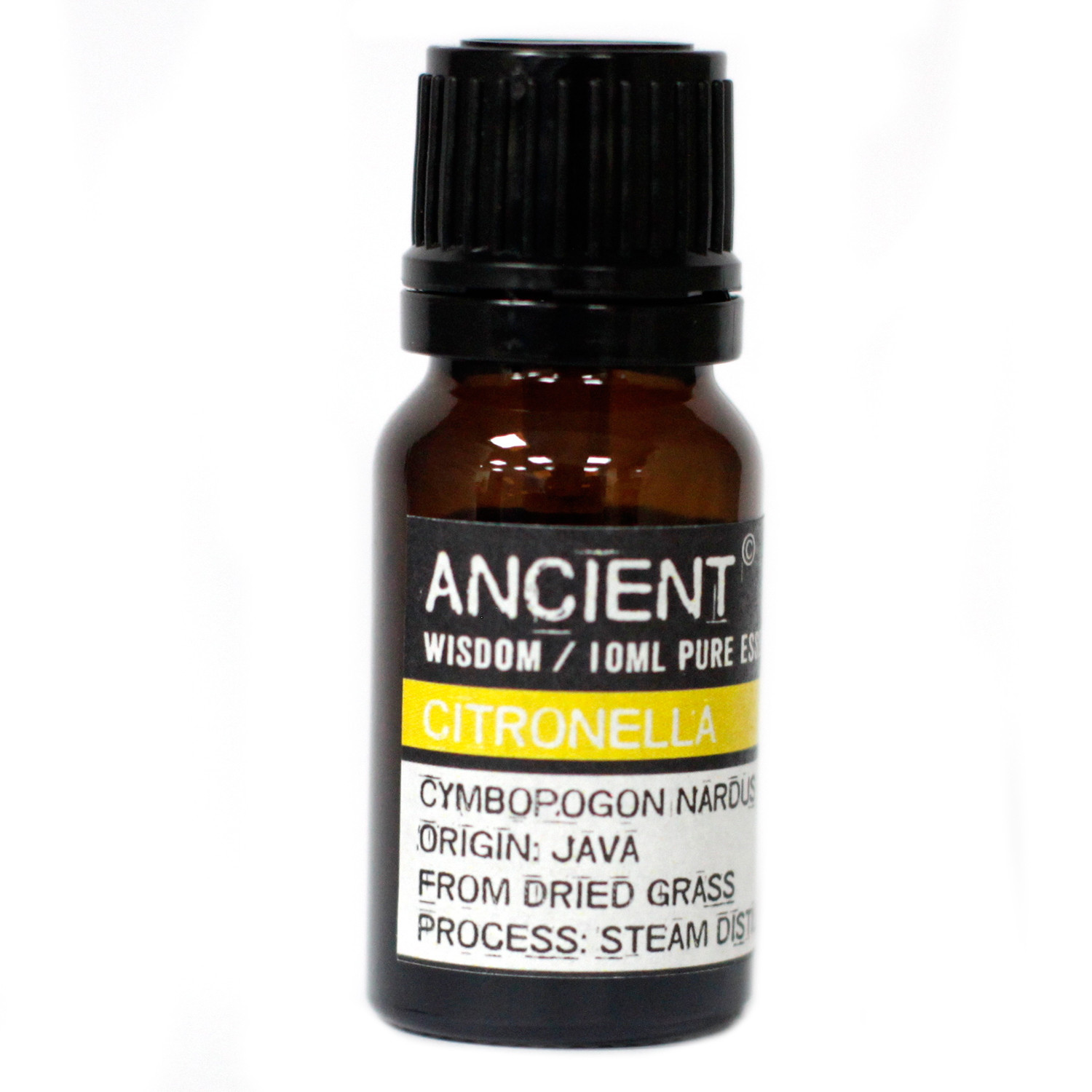
Citronella Essential Oil
Latin Name: Cymbopogon Nardus
Part Of Plant Used: Dried Grass
Source: Java
Extraction Method: Steam Distillation
£4.55 – £69.95Price range: £4.55 through £69.95
Citronella Essential Oil by The World of Aromatherapy
Nature’s Bright Melody: A Zesty Ode to Tropical Reverie
🌿 Tropical Tapestry: Venture to sun-drenched landscapes where citronella grass sways to the rhythm of balmy breezes. From these green swathes, we’ve captured a vibrant vitality — our Citronella Essential Oil.
💧 Lively Luminescence: Allow the fresh, lemony notes of Citronella to whisk you away. It’s a spirited symphony of citrusy spark and grassy undertones, reminiscent of serene summer evenings under a cerulean sky.
✨ Energetic Elixir: Citronella’s invigorating essence has been lauded not just for its refreshing aroma but also for its revitalising properties. It’s a beacon of vibrancy, perfect for ushering in clarity and vigour to your daily rituals.
📜 Purity and Precision: At The World of Aromatherapy, our Citronella Essential Oil is a testament to our unwavering dedication. Expertly distilled, each drop remains true to nature, embodying the zest and zeal of the tropics.
🌍 Eco Ethos: Upholding our vow to Mother Nature, our Citronella Oil stems from sustainable practices, ensuring harmony with the environment and honouring the rhythm of the Earth.
Usage Guidance: Introduce a few radiant drops to your diffuser, transporting you to tropical paradises, or blend harmoniously with a carrier oil for a tactile experience. We advocate for careful dilution and a preliminary skin patch test for first-time users.
Illuminate Your Senses. Dive into a Citrusy Dreamscape with The World of Aromatherapy’s Citronella Oil.
Latin Name: Cymbopogon Nardus
Part Of Plant Used: Dried Grass
Source: Java
Extraction Method: Steam Distillation
| Weight | 0.04 kg |
|---|---|
| Size | 10ml, 50ml, 500ml |
You must be logged in to post a review.


Citronella essential oil is a popular ingredient in aromatherapy due to its many benefits. This essential oil is extracted from the leaves and stems of the citronella plant, which is native to Asia. It has a fresh, lemony scent that is both uplifting and invigorating.
Citronella essential oil has been used for centuries in traditional medicine to treat a variety of ailments. It is known for its ability to relieve pain, reduce inflammation, and promote relaxation. In aromatherapy, citronella essential oil is often used to help alleviate stress and anxiety, as well as to improve mood and promote mental clarity.
Citronella essential oil is obtained from the leaves of the Cymbopogon family, which is a genus of about 55 species of grasses. The grasses are native to Southeast Asia and are commonly known as lemon grass or citronella grass.
Citronella essential oil is primarily extracted from two species of the Cymbopogon family: Cymbopogon nardus and Cymbopogon winterianus. Cymbopogon nardus is commonly known as Sri Lankan citronella, while Cymbopogon winterianus is known as Java citronella. Both species are Asian grass plants that grow up to 1.5 meters tall and have long, slender leaves.
The oil is extracted from the leaves of the plants through steam distillation. The oil has a yellowish-brown color and a sweet, lemony scent. It is a popular ingredient in perfumes, soaps, and candles.
Citronella essential oil has been used for centuries in traditional medicine in Southeast Asia. It was used to treat various ailments, including fever, headache, and digestive issues. It was also used as an insect repellent.
Today, citronella essential oil is widely used in aromatherapy for its refreshing scent. It is also used as an insect repellent and is a popular ingredient in natural insect repellent products.
In conclusion, citronella essential oil is a versatile oil with a long history of traditional use in Southeast Asia. Its refreshing scent and insect repellent properties make it a popular ingredient in aromatherapy and natural insect repellent products.
Citronella essential oil is extracted from the leaves and pseudostems of the Cymbopogon citratus plant. The oil extraction process is a crucial step that determines the quality and purity of the final product. There are several methods of extracting essential oils, and each method has its advantages and disadvantages.
Steam distillation is the most common method used to extract essential oils, including citronella oil. In this process, steam is passed through the plant material, which causes the essential oils to be released. The steam and oil vapours are then condensed and collected separately. Steam distillation is a gentle and efficient method of extraction that produces high-quality essential oils.
Solvent extraction is another method of extracting essential oils. In this process, a solvent such as hexane is used to extract the oil from the plant material. The solvent is then evaporated, leaving behind the essential oil. Solvent extraction is a more efficient method of extraction than steam distillation but can leave behind trace amounts of the solvent in the final product.
Other methods of extracting citronella oil include cold press extraction, water distillation, enfleurage, and maceration. Cold press extraction is used to extract essential oils from citrus fruits, while water distillation is used to extract oils from delicate plant material. Enfleurage and maceration are traditional methods of extraction that involve soaking the plant material in oil or fat to extract the essential oils.
In recent years, microwave intensified extraction has emerged as a new method of extracting citronella oil. This process uses microwave energy to heat the plant material, which increases the efficiency of the extraction process.
Overall, steam distillation is the preferred method of extracting citronella essential oil due to its efficiency and ability to produce high-quality oils. However, other methods can also be used depending on the specific needs of the manufacturer.
Citronella essential oil is derived from the leaves and stems of the Cymbopogon genus, specifically the Cymbopogon nardus and Cymbopogon winterianus species. These grasses are native to tropical regions of Asia, particularly Sri Lanka. There are two primary types of citronella essential oil: Java type and Ceylon type.
Java type citronella essential oil is derived from the Cymbopogon winterianus plant, which is also known as Java citronella. This type of citronella oil has a higher citronellal content (35-45%) and is considered to be of higher quality than Ceylon citronella. It also contains geraniol (20-30%), citronellol (5-15%), and neral (2-10%).
Ceylon type citronella essential oil is derived from the Cymbopogon nardus plant, which is also known as Sri Lankan citronella. This type of citronella oil has a lower citronellal content (15-20%) and is considered to be of lower quality than Java citronella. It also contains geraniol (10-20%), citronellol (20-25%), and eugenol (2-5%).
Both types of citronella essential oil have a fresh, lemony scent and are commonly used in aromatherapy for their insect-repelling properties. They are also used in the fragrance and flavour industry, as well as in traditional medicine.
Citronella essential oil should be used with caution, as it can cause skin irritation in some individuals. It is also important to note that while citronella oil has insect-repelling properties, it is not as effective as DEET or other synthetic insecticides.
Citronella essential oil is a versatile oil that has a range of uses in aromatherapy. Here are some of the ways in which it can be used:
Citronella essential oil has a fresh, uplifting scent that can help to boost mood and relieve stress. It can be used in a diffuser to create a calming and invigorating atmosphere in the home or workplace.
Citronella essential oil can also be used as a sleep aid. Its calming properties can help to promote relaxation and improve the quality of sleep. It can be diffused in the bedroom or added to a warm bath before bedtime.
Citronella essential oil can help to combat fatigue and increase energy levels. It can be used in a diffuser or added to a carrier oil and massaged into the skin to help reduce feelings of tiredness and improve mental clarity.
Citronella essential oil is well-known for its insect-repelling properties. It can be added to a diffuser or applied topically to help repel mosquitoes and other biting insects.
Overall, citronella essential oil is a versatile and useful oil that can be used in a range of aromatherapy applications. Its fresh, uplifting scent and insect-repelling properties make it a popular choice for use in the home and outdoors.
Citronella essential oil has been used for centuries for its various health benefits. It is derived from the leaves and stems of the Cymbopogon plant and has a fresh, lemony scent. Here are some of the health benefits of using citronella essential oil in aromatherapy:
Citronella essential oil has been found to have antimicrobial properties, which means it can help fight against harmful bacteria, viruses, and fungi. This makes it a great oil to use in diffusers or sprays to purify the air and keep germs at bay.
Citronella essential oil has been shown to have anti-inflammatory effects, which can help reduce swelling and pain in the body. It is also believed to have pain-relieving properties, which can be helpful for those suffering from conditions such as arthritis or muscle soreness.
Citronella essential oil has been used traditionally to help with digestive issues such as bloating, nausea, and indigestion. It is believed to help stimulate the production of digestive juices, which can aid in the digestion process.
Citronella essential oil has been found to have antioxidant properties, which means it can help protect the body against damage caused by free radicals. It also has antifungal properties, which can help fight against fungal infections such as Candida albicans.
Citronella essential oil has been found to have anticonvulsant effects, which means it can help reduce the severity and frequency of seizures. This makes it a potential natural treatment option for those with epilepsy or other seizure disorders.
Overall, citronella essential oil has a wide range of potential health benefits that make it a popular choice for those looking to improve their overall well-being.
Citronella essential oil is a popular natural insect repellent that is commonly used to repel mosquitoes, ticks, lice, and other biting insects. The oil is extracted from the leaves and stems of the Cymbopogon genus of plants, which are native to tropical regions of Asia.
The use of citronella oil in insect repellents is supported by scientific research. A study conducted by the USDA found that citronella oil was effective in repelling Aedes aegypti mosquitoes, which are known to transmit dengue fever and yellow fever.
Citronella oil is also effective against other types of mosquitoes. A study published in the Journal of the American Mosquito Control Association found that citronella oil was effective in repelling mosquitoes for up to two hours.
Citronella oil is often used in combination with other essential oils, such as lavender, peppermint, and lemongrass, to create natural insect repellents. These blends can be applied directly to the skin or used in diffusers to repel insects.
It is important to note that while citronella oil is a natural insect repellent, it may not be as effective as synthetic insect repellents such as DEET. However, for those who prefer natural alternatives, citronella oil can be a safe and effective option for repelling insects.
Citronella essential oil is not only useful in repelling insects, but it also has a variety of other applications. Here are some of the ways in which citronella essential oil can be used:
Citronella essential oil can be used to make tea, which is believed to have a calming effect on the body. To make citronella tea, add a few drops of citronella essential oil to hot water and let it steep for a few minutes. The tea can be sweetened with honey or sugar if desired.
Citronella essential oil is often used in perfumes and soaps, due to its fresh, citrusy scent. It can be used alone or blended with other essential oils to create unique fragrances.
Citronella essential oil is a popular ingredient in candles and room sprays, as it helps to repel insects while also filling the air with a pleasant scent. Citronella candles are perfect for outdoor use, as they can help to keep mosquitoes and other bugs away.
Citronella essential oil can be used in massage oils to help soothe sore muscles and joints. It can also help to improve circulation and reduce inflammation. When using citronella essential oil in a massage, it is important to dilute it with a carrier oil such as coconut or jojoba oil.
Citronella essential oil can also be used in a variety of other products, such as lotions, creams, and balms. It can help to moisturize the skin, while also providing a refreshing scent. When using citronella essential oil in these products, it is important to follow recommended dilution guidelines to avoid skin irritation.
Overall, citronella essential oil is a versatile and useful oil that can be used in a variety of applications. Whether you are looking to repel insects, create a pleasant scent, or soothe sore muscles, citronella essential oil is a great choice.
Citronella essential oil is generally safe for use, but some precautions should be taken to avoid any adverse effects. Here are some safety measures to keep in mind when using citronella essential oil:
Citronella essential oil should always be diluted before use. Undiluted citronella oil may cause skin irritation, redness, and itching. It is recommended to mix citronella oil with a carrier oil such as coconut or jojoba oil before applying it to the skin.
Citronella oil should not be used on children under the age of six months. For children over six months, citronella oil should be used with caution and only in highly diluted concentrations. It is recommended to consult with a healthcare professional before using citronella oil on children.
Citronella oil should not be applied directly to the eyes or mucous membranes. If citronella oil comes into contact with the eyes, flush them with water immediately.
Citronella oil should not be ingested or taken internally. Ingesting citronella oil can cause nausea, vomiting, and other adverse effects. If ingested, seek medical attention immediately.
Here are some other precautions to keep in mind when using citronella essential oil:
By following these safety measures, you can safely enjoy the benefits of citronella essential oil for aromatherapy purposes.
Citronella essential oil has a fresh, citrusy, and lemony aroma that blends well with other essential oils to create a unique and powerful scent. Here are some essential oils that can be blended with citronella essential oil:
To create a blend with citronella essential oil, simply add a few drops of the desired essential oil to a diffuser, a carrier oil such as coconut oil, or a room spray. Experiment with different ratios and combinations to find the perfect blend for your needs. Remember to always dilute essential oils properly and follow safety guidelines when using them.


Reviews
There are no reviews yet.